
-
How Does Baseline Testing Help Teams Track and Maintain Software Quality?
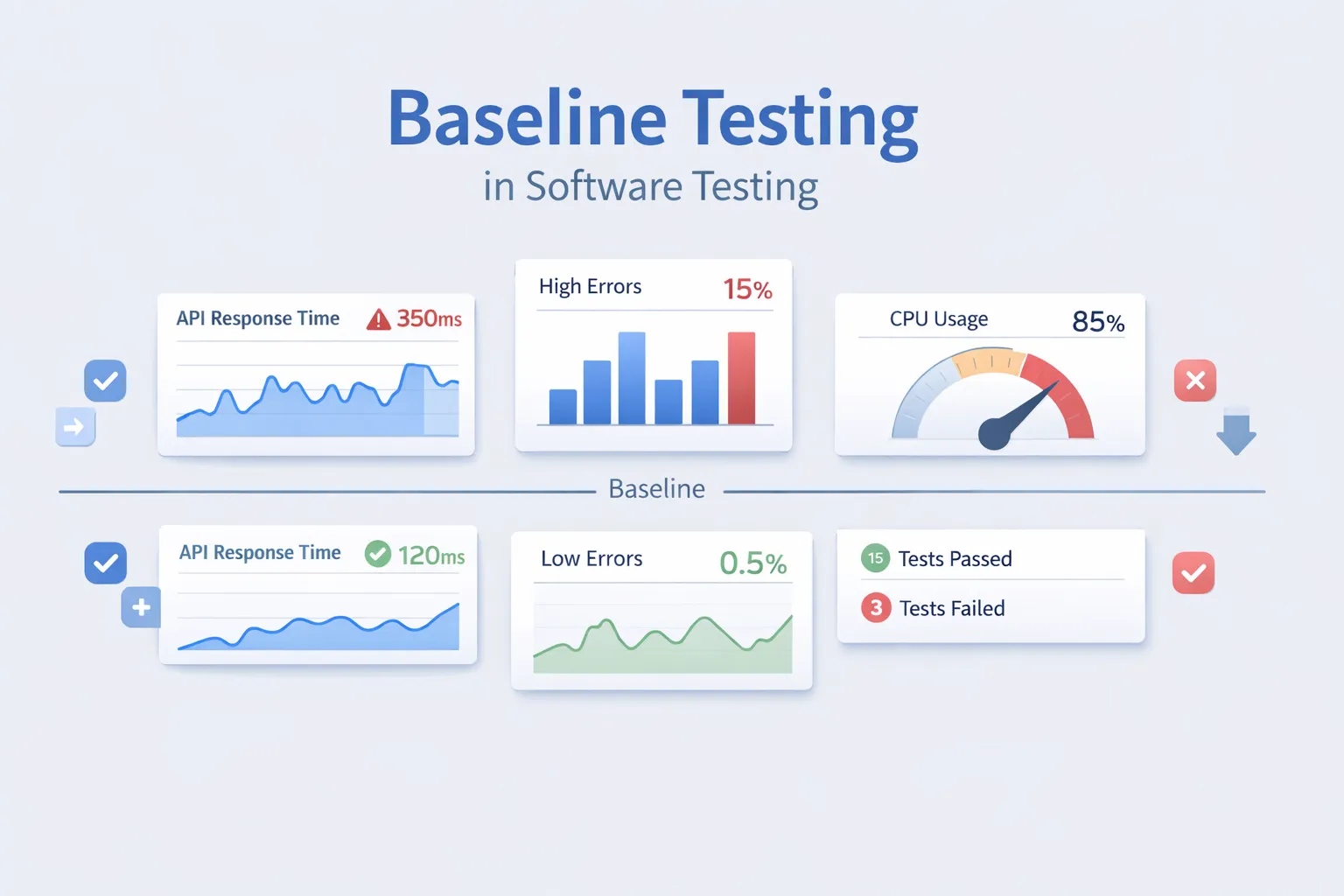
Baseline testing is a practice that establishes a known reference point for an application’s behavior, functionality, or performance. This reference, or “baseline,” serves as a standard against which all future builds can be compared, helping teams quickly identify unintended changes or regressions.
In fast-moving development environments with frequent updates, even minor changes can have unexpected side effects. Baseline testing allows teams to detect deviations early by comparing current results against the baseline. This includes functional inconsistencies, performance shifts, and other anomalies that could affect user experience or system reliability.
By integrating baseline testing into regular QA workflows, teams can maintain consistent quality across releases, make data-driven decisions about changes, and reduce the risk of production defects. Over time, it becomes an essential tool for monitoring trends, validating improvements, and ensuring that software continues to meet established standards of performance and reliability.
keploy.io
Baseline Testing Explained: Meaning, Examples & Use Cases
Learn what baseline testing is, why it matters, types, metrics, and real examples of using baseline tests to catch regressions early in CI/CD pipelines.
Sorry, there were no replies found.